

 English
 中文简体
中文简体 русский
Vertical Metal Band Saw vs. Horizontal: Which is Right for Your Shop?
The Vertical Metal Band Saw is a widely used machine in workshops for cutting long or narrow metal workpieces, providing precise control over vertical cuts. Its design allows operators to work with limited floor space while maintaining accuracy and safety. In comparison, horizontal band saws are better suited for batch processing of straight cuts, often handling larger or heavier materials efficiently. When angled or complex cuts are required, the Cutting Angle 0-60 Saw Machine can be used in conjunction with either type of saw to provide flexible cutting options that vertical or horizontal saws alone may not achieve.
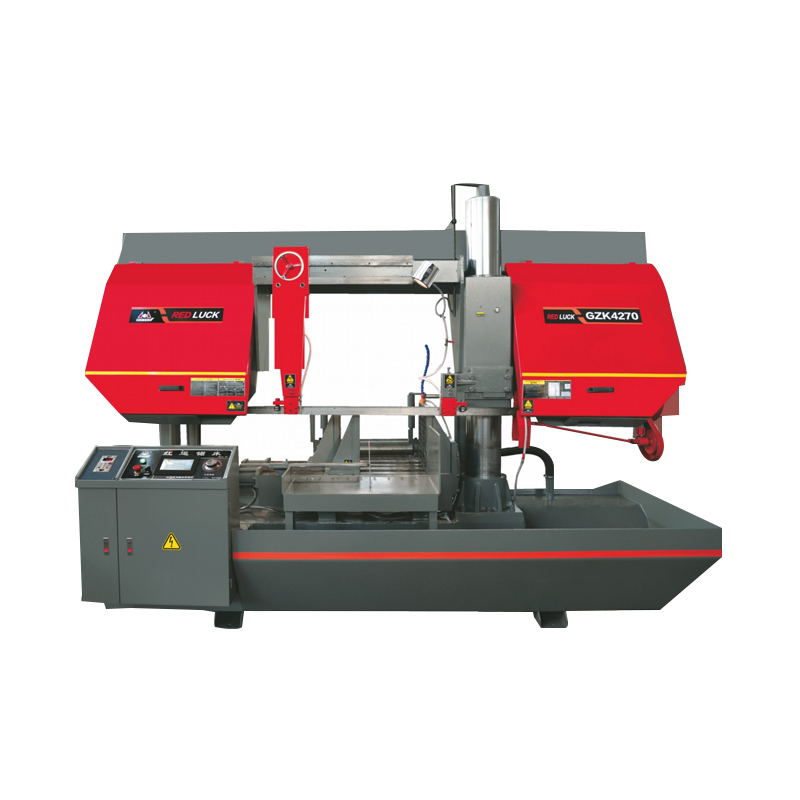
Advantages of Vertical Metal Band Saws
Vertical band saws offer several practical benefits for a workshop. They are capable of precise straight cuts, suitable for detailed work on narrow or long materials, and are easier to integrate into smaller spaces. The vertical orientation allows gravity to assist with feed control, which can improve cut consistency. Additionally, vertical saws are well-suited for making irregular cuts or contours that require careful guidance of the workpiece.
The Cutting Angle 0-60 Saw Machine enhances these capabilities by providing controlled angle adjustments, allowing angled or complex profiles to be cut accurately without straining the vertical band saw. This combination of machines ensures both standard and angled cuts can be handled efficiently within the same workspace.
Advantages of Horizontal Band Saws
Horizontal band saws excel in applications that require repetitive straight cuts on heavier materials, such as metal bars or large tubes. Their orientation and feed mechanism make it easier to apply uniform pressure, reducing operator fatigue when performing multiple cuts. They are typically used in production settings where speed and consistent straight cuts are priorities.
While horizontal saws handle repetitive straight cuts well, they are not as flexible for angle work. Here, the Cutting Angel 0-60 Saw Machine can complement horizontal saws by performing angled cuts that horizontal saws are less suited for, allowing shops to expand their cutting capabilities without investing in additional specialized machines.
Workflow Considerations
Choosing between a vertical or horizontal band saw depends on workshop space, material types, and project requirements. Vertical saws are practical for intricate or contour work, while horizontal saws are advantageous for bulk straight cuts on larger workpieces. Incorporating the Cutting Angel 0-60 Saw Machine provides additional flexibility, particularly for operations that require precision angles or custom profiles.
A practical workflow may involve using the vertical saw for detailed work, horizontal saws for bulk cuts, and the 0-60 saw for angle-sensitive cuts. This approach allows for efficient use of floor space and machinery while achieving a wide range of cutting operations without compromising precision.
Maintenance and Longevity
Both vertical and horizontal band saws require consistent maintenance to perform reliably. Key practices include checking blade tension, inspecting guides, cleaning moving parts, and ensuring proper lubrication. The Cutting Angel 0-60 Saw Machine similarly benefits from regular inspection of its rotation and angle-locking mechanisms, ensuring accurate and repeatable cuts. Consistent maintenance extends blade life, improves cut quality, and reduces unexpected downtime in the workshop.
When deciding between a Vertical Metal Band Saw and a horizontal band saw, operators should consider the type of cuts needed, material sizes, and available workshop space. Vertical saws provide precision for intricate work, horizontal saws offer efficiency for repetitive straight cuts, and the Cutting Angel 0-60 Saw Machine adds the ability to perform controlled angled cuts. Combining these machines allows a workshop to handle a wide range of tasks efficiently, providing versatility without sacrificing quality or safety. By understanding the strengths and applications of each saw type, users can design workflows that make the most of their equipment and achieve consistent results.


Provide customers with pre-sales professional training, installation, and debugging during sales, solve practical operation problems, and provide long-term technical consultation.
-

+86-0578-3016831
-

+86-0578-3016831
-

-

No. 39, Yahua Road, New District, Huzhen Town, Jinyun County
Copyright © Zhejiang Hongyun Sawing Machine Co., Ltd.

Metal Band Sawing Machine Manufacturer