

 English
 中文简体
中文简体 русский
Steel Bar Saw Usage Insights for Steel Fabrication Workshops Today
In steel fabrication environments, cutting equipment plays an essential role in shaping workflow efficiency and supporting consistent production output. Within this setting, Steel Bar Saw and CNC Sawing Machine systems are widely applied across different processing stages, each serving distinct operational needs. Their usage patterns in workshops today reflect a balance between manual flexibility and controlled automation.
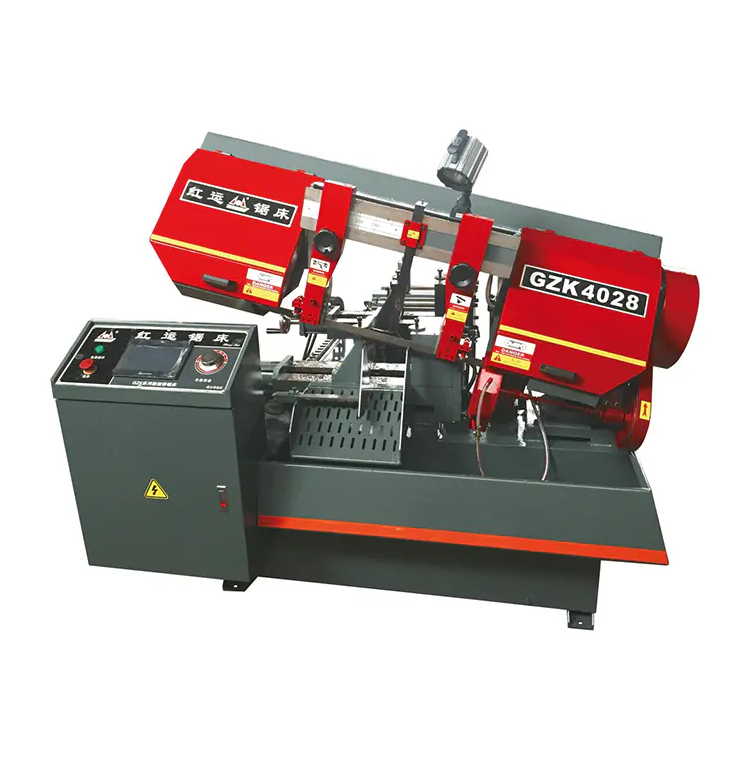
A Steel Bar Saw is commonly used for general-purpose cutting tasks, especially where raw steel bars need to be processed into defined lengths for further fabrication. A CNC Sawing Machine is more often introduced when repeatable precision and programmable cutting sequences are required. In many workshops, both systems are used side by side to support different production demands.
Typical Workshop Cutting Applications
Steel fabrication workshops handle a wide range of cutting requirements, from structural components to mechanical parts. A Steel Bar Saw is frequently applied in initial processing stages where speed and material throughput are important. It allows operators to handle varying bar sizes and materials with flexible adjustment.
A CNC Sawing Machine is typically used when cutting accuracy becomes more important than manual flexibility. It supports repeated cutting tasks where consistent length and controlled sequencing are required. This combination allows workshops to manage both general fabrication and precision-driven orders.
Equipment Operation Patterns
In many workshop environments, a Steel Bar Saw is operated in either semi-automatic or manual-assisted modes. Operators adjust feed rates and cutting positions based on material type and job requirements. This makes it suitable for varied workloads and changing production schedules.
A CNC Sawing Machine operates through programmed instructions, reducing manual intervention. Once cutting parameters are set, the machine follows predefined sequences. This allows operators to focus more on material preparation and output handling rather than continuous adjustment.
Material Handling Considerations
Steel fabrication workshops often process different grades of steel, including carbon steel and alloy-based materials. A Steel Bar Saw is generally used for bulk material reduction, where handling flexibility is important. A CNC Sawing Machine is better suited for controlled cutting where dimensional consistency is required.
Material hardness and surface condition can influence cutting behavior. Harder materials may increase tool wear, requiring more frequent blade inspection and adjustment. Proper handling procedures help maintain stable cutting conditions across both systems.
Efficiency and Workflow Balance
Workshop efficiency depends on how well different machines are coordinated within production flow. A Steel Bar Saw supports rapid cutting of incoming material batches, helping reduce raw stock into workable sizes. A CNC Sawing Machine then refines these parts into more precise dimensions.
When both machines are balanced in workload distribution, material flow remains steady. If one machine processes material significantly faster than the other, bottlenecks may form, affecting overall workshop productivity.
Operator Skill and Usage Flexibility
Operator experience plays a significant role in Steel Bar Saw performance. Skilled operators can adjust cutting parameters effectively to handle different materials and job requirements. This flexibility is valuable in workshops where production tasks frequently change.
A CNC Sawing Machine reduces dependency on manual skill by relying on programmed instructions. However, operators still need to understand setup procedures, programming logic, and maintenance routines to ensure stable operation.
Maintenance Practices in Workshop Use
Regular maintenance is important for both Steel Bar Saw and CNC Sawing Machine systems. Blade condition, alignment accuracy, and lubrication systems all affect cutting quality and operational stability.
In workshop environments, maintenance schedules are often based on usage frequency rather than fixed intervals. Machines used in high-volume cutting require more frequent inspection to maintain consistent output quality.
Space and Layout Considerations
Workshop layouts influence how effectively cutting machines are used. A Steel Bar Saw is often placed in areas close to raw material storage for quick access. A CNC Sawing Machine may be positioned closer to downstream processing stations to support precision workflows.
Efficient layout planning reduces unnecessary material movement and improves operational flow between cutting and subsequent fabrication stages.
Usage Trends in Modern Workshops
Many steel fabrication workshops are gradually combining traditional cutting methods with automated systems. The Steel Bar Saw remains a reliable option for flexible processing, while the CNC Sawing Machine supports structured and repeatable cutting tasks.
This combined usage approach allows workshops to handle a broader range of production requirements without relying on a single processing method.


Provide customers with pre-sales professional training, installation, and debugging during sales, solve practical operation problems, and provide long-term technical consultation.
-

+86-0578-3016831
-

+86-0578-3016831
-

-

No. 39, Yahua Road, New District, Huzhen Town, Jinyun County
Copyright © Zhejiang Hongyun Sawing Machine Co., Ltd.

Metal Band Sawing Machine Manufacturer