

 English
 中文简体
中文简体 русский
Steel Bar Saw Performance Factors in Automated Production Line Systems
In automated metal processing environments, cutting performance is strongly influenced by how equipment is arranged within production workflows and how consistently it operates under continuous load. Within this structure, Steel Bar Saw and CNC Sawing Machine systems are often evaluated together, since they are commonly used in connected stages of material preparation and precision cutting.
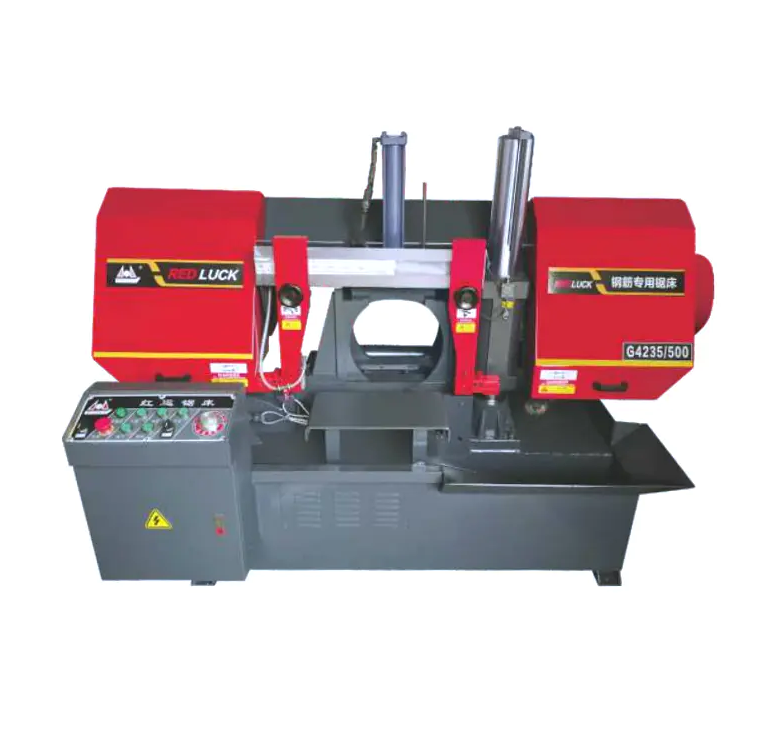
A Steel Bar Saw is typically applied in initial cutting processes where raw metal bars are divided into manageable lengths. A CNC Sawing Machine is more frequently used in later stages where higher control over dimensions and cutting sequences is required. When both are integrated into a production line, overall performance depends less on individual machine capability and more on coordination between systems.
Stability in Continuous Operation
A key factor in production environments is operational stability over long-running periods. A Steel Bar Saw is expected to maintain steady cutting performance without noticeable deviation in alignment or feed behavior. Even small inconsistencies may affect downstream processing accuracy.
A CNC Sawing Machine relies on programmed movement and controlled feed systems. When both machines maintain stable operation, the production line experiences fewer interruptions and more consistent material flow.
Material Response During Cutting
Different materials react differently during cutting operations. Carbon steel generally allows smoother cutting conditions, while alloy materials may increase resistance and tool wear. In integrated systems, the Steel Bar Saw is often used for bulk cutting tasks, while the CNC Sawing Machine handles more precise dimensional requirements.
Heat generation during cutting also affects blade condition and surface quality. Proper cooling and lubrication help maintain stable cutting behavior across both systems.
Feed System Coordination
Material feeding systems play an important role in automated lines. A Steel Bar Saw often works with automatic feeding units that supply material in a continuous or step-by-step manner. When feeding is properly synchronized, cutting cycles remain consistent.
A CNC Sawing Machine may use programmable feed adjustments depending on cutting requirements. Differences in feed speed between machines can create workflow imbalance, making synchronization an important factor in system design.
Control System Functionality
Control systems determine how cutting tasks are executed. A Steel Bar Saw usually follows fixed cutting cycles with simpler control logic, while a CNC Sawing Machine uses programmable systems to manage multiple cutting parameters such as length, sequence, and speed.
When both systems operate within the same production environment, consistent control logic helps maintain smooth transitions between cutting stages.
Wear and Maintenance Behavior
Tool wear gradually affects cutting performance. In Steel Bar Saw operations, wear patterns often depend on cutting volume and material hardness. In CNC Sawing Machine operations, wear may be distributed more evenly due to controlled cutting paths.
Regular maintenance of blades, alignment systems, and cooling components helps maintain stable operation and reduces unexpected downtime.
Integration in Production Layout
When combining Steel Bar Saw and CNC Sawing Machine systems, production layout plays an important role. Poor arrangement may lead to unnecessary material handling or uneven workload distribution.
A well-planned setup allows bulk cutting and precision cutting stages to connect smoothly, reducing redundant movement of materials and improving workflow continuity.
Workflow Efficiency Considerations
Production efficiency depends on how well different machines support each other. A Steel Bar Saw handles rapid segmentation of raw materials, while a CNC Sawing Machine focuses on controlled precision cutting.
When both operate in balance, material flow remains stable, and production interruptions are reduced. This balance supports smoother operations over long production cycles.
Operational Overview
Steel Bar Saw and CNC Sawing Machine systems contribute differently within automated production environments. Their combined performance is shaped by stability, coordination, material behavior, and integration design. Proper alignment between both systems helps maintain consistent cutting output across production stages.


Provide customers with pre-sales professional training, installation, and debugging during sales, solve practical operation problems, and provide long-term technical consultation.
-

+86-0578-3016831
-

+86-0578-3016831
-

-

No. 39, Yahua Road, New District, Huzhen Town, Jinyun County
Copyright © Zhejiang Hongyun Sawing Machine Co., Ltd.

Metal Band Sawing Machine Manufacturer