

 English
 中文简体
中文简体 русский
CNC Sawing Machine Role in Automated Manufacturing Production Workflows
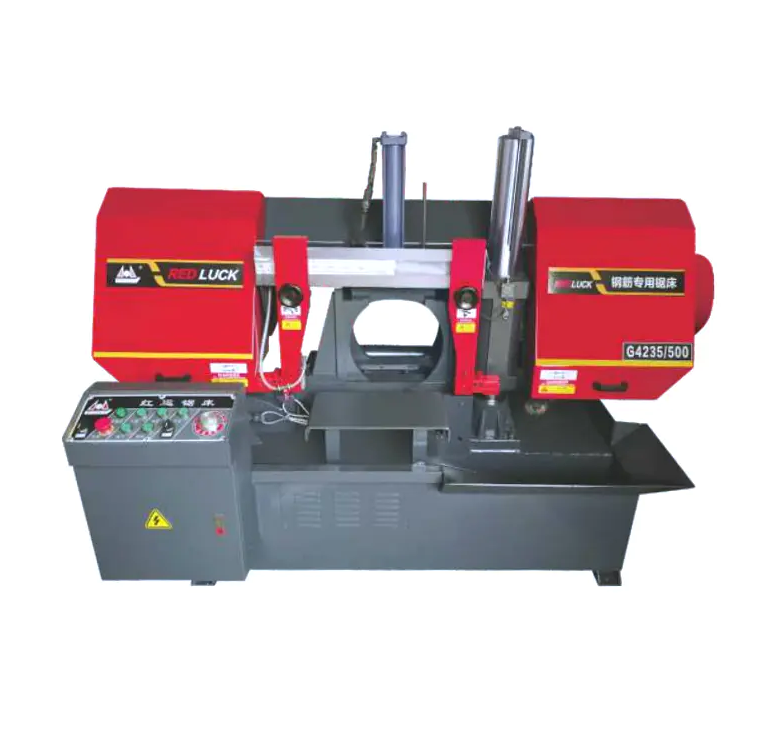
In automated manufacturing environments, cutting equipment is no longer treated as a standalone unit but as a connected node within a larger production system. Within this structure, Steel Bar Saw and CNC Sawing Machine technologies play different but complementary roles. The CNC-based system is increasingly positioned as a key coordination point in production workflows where timing, accuracy, and process continuity are required.
A CNC Sawing Machine is commonly used to execute controlled cutting operations based on programmed instructions, while a Steel Bar Saw is often applied in earlier stages for bulk material preparation. When both are integrated into automated workflows, their interaction influences material flow efficiency and downstream processing stability.
Position in Automated Production Chains
In a typical automated manufacturing workflow, material moves through several structured stages. A Steel Bar Saw is often responsible for initial segmentation of raw material into manageable sections. A CNC Sawing Machine then processes these sections into more precise dimensions based on production requirements.
This staged approach helps separate rough cutting from precision cutting, allowing each system to focus on a specific function within the overall workflow.
Workflow Synchronization and Material Flow
Synchronization between machines is essential for maintaining continuous production. A Steel Bar Saw must deliver cut material at a pace that matches downstream processing capacity. If output is too fast or too slow, workflow imbalance may occur.
A CNC Sawing Machine relies on controlled cycle timing to maintain steady processing output. When both systems are aligned within a production line, material flow becomes more predictable, reducing idle time and unnecessary buffering between stages.
Automation and Control Integration
Automation in modern manufacturing is heavily dependent on control system integration. CNC Sawing Machine units are typically equipped with programmable controllers that allow precise adjustment of cutting parameters and sequence logic.
Steel Bar Saw systems often operate with simpler control structures, focusing on repetitive cutting functions. When integrated, the CNC system often acts as a coordination layer, helping align cutting operations with broader production schedules.
Role in Reducing Manual Intervention
One of the key contributions of CNC Sawing Machine systems in automated workflows is the reduction of manual intervention. Once cutting parameters are defined, the system can operate through repeated cycles with limited operator input.
Steel Bar Saw systems may still require more manual adjustment depending on configuration and production variability. By combining both systems, manufacturers can reduce operator workload in precision stages while retaining flexibility in bulk processing stages.
Coordination with Upstream and Downstream Systems
In automated environments, saw cutting equipment must interact with upstream feeding systems and downstream machining or assembly stations. A Steel Bar Saw is often positioned near material storage or feeding zones, while a CNC Sawing Machine is placed closer to precision processing lines.
This arrangement supports smoother transitions between material stages and reduces unnecessary handling. Proper coordination helps maintain consistent production rhythm across the entire workflow.
Data Handling and Process Monitoring
Modern CNC Sawing Machine systems may include data tracking functions that record cutting parameters, cycle counts, and operational status. This information can be used to monitor production consistency and identify process variations.
Steel Bar Saw systems typically provide more limited data feedback, focusing on mechanical operation status. When both systems are used together, CNC data becomes a reference point for optimizing workflow timing and maintenance planning.
Operational Continuity in Automated Systems
Maintaining continuous operation is a key goal in automated manufacturing. CNC Sawing Machine systems support this goal through programmable cycles and stable repeatability. Steel Bar Saw systems contribute by handling variable input materials and preparing them for controlled processing.
When both systems are properly balanced, production lines can maintain more consistent operation with fewer interruptions caused by material mismatch or processing delays.
System-Level Workflow Contribution
The role of CNC Sawing Machine equipment in automated manufacturing extends beyond cutting alone. It contributes to overall workflow structure, helping define how material moves through different production stages.
Steel Bar Saw systems support this structure by handling early-stage material preparation. Together, they form a layered cutting process that supports both flexibility and precision within automated manufacturing environments.


Provide customers with pre-sales professional training, installation, and debugging during sales, solve practical operation problems, and provide long-term technical consultation.
-

+86-0578-3016831
-

+86-0578-3016831
-

-

No. 39, Yahua Road, New District, Huzhen Town, Jinyun County
Copyright © Zhejiang Hongyun Sawing Machine Co., Ltd.

Metal Band Sawing Machine Manufacturer