

 English
 中文简体
中文简体 русский
Why Are More Fabricators Upgrading to a Gantry Horizontal Metal Band Saw?
In today's metal fabrication industry, buyers are under constant pressure to improve cutting accuracy, reduce material waste, and keep production running efficiently despite labor shortages and rising operating costs. These challenges explain why the Gantry Horizontal Metal Band Saw has become a frequent topic among procurement managers, production engineers, and fabrication companies. Whether processing structural steel, tool steel, aluminum, or large forgings, selecting the right cutting equipment directly affects downstream machining quality, delivery schedules, and overall manufacturing costs.
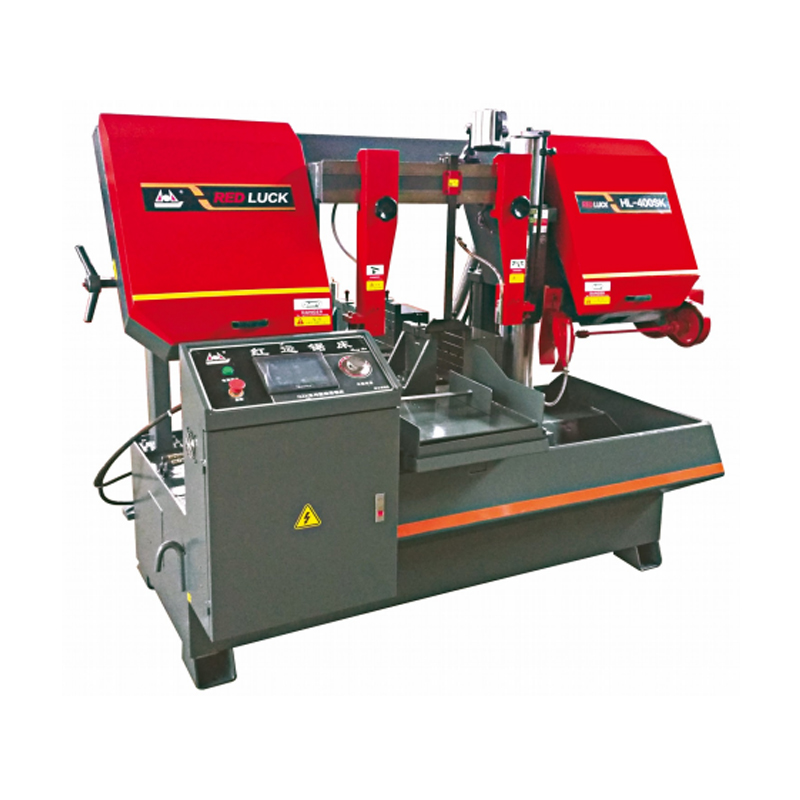
The Shift Toward Large-Scale Precision Cutting
Across manufacturing sectors, companies are investing in equipment that can handle oversized workpieces without sacrificing precision. Industries such as heavy equipment, energy, shipbuilding, steel service centers, and mold manufacturing increasingly require machines capable of cutting thick and heavy materials consistently.
A gantry-style horizontal band saw offers several practical advantages for these demanding applications. Its rigid frame design helps maintain cutting stability during long production cycles, while the horizontal cutting structure allows operators to process large sections with reliable repeatability. For manufacturers looking to reduce secondary machining, stable cutting performance is becoming just as important as cutting speed.
What Procurement Teams Usually Compare Before Buying
Purchasing decisions today extend beyond machine specifications. Experienced buyers often compare the complete production value that a machine can deliver over its service life.
Typical evaluation factors include:
Cutting capacity for large workpieces
Blade stability during continuous production
Ease of maintenance and blade replacement
Hydraulic feeding accuracy
Compatibility with different metal materials
Automation options for batch production
Long-term spare parts availability and technical support
These considerations explain why many buyers search for terms such as industrial horizontal band saw for steel cutting, gantry band saw machine manufacturer, and heavy-duty metal cutting band saw before making purchasing decisions.
How a Stable Cutting Process Reduces Hidden Production Costs
Many fabrication facilities focus primarily on cutting speed. In reality, unstable cutting often creates higher hidden costs than slower production.
Common problems include blade deviation, premature blade wear, inconsistent surface finish, excessive vibration, and additional machining requirements after cutting. These issues consume labor, increase material waste, and interrupt production schedules.
A properly engineered Gantry Horizontal Metal Band Saw minimizes these risks through structural rigidity, controlled feeding systems, and consistent blade tension. The result is smoother cuts that improve the efficiency of subsequent milling, drilling, or welding operations.
Material Diversity Demands Greater Machine Flexibility
Modern manufacturers rarely process a single material every day. Production schedules may include carbon steel in the morning, stainless steel in the afternoon, and aluminum components later the same shift.
Instead of investing in multiple specialized machines, many workshops now prefer equipment that adapts to different materials with minimal setup changes.
A versatile horizontal metal band saw should provide adjustable cutting parameters, reliable clamping systems, and sufficient rigidity for a wide range of applications. This flexibility helps manufacturers respond quickly to changing customer orders while maintaining consistent production quality.
Why Manufacturer Expertise Matters Beyond the Machine
Choosing the equipment supplier can be just as important as choosing the equipment itself.
As a professional manufacturer, we understand that customers need more than machine delivery. They expect practical engineering support throughout the equipment lifecycle, including machine selection, application recommendations, installation guidance, operator training, and responsive after-sales service.
Close communication before production also allows manufacturers to recommend suitable configurations based on actual cutting materials, workpiece dimensions, production volume, and future automation requirements rather than offering a one-size-fits-all solution.
Preparing for Future Production Requirements
Manufacturing continues to move toward smarter production and greater operational efficiency. Even companies that are not fully automated today often prefer equipment designed for future upgrades.
When selecting a new machine, many buyers now consider whether it can integrate with automatic material handling systems, production management software, or customized loading solutions as business grows. Investing in scalable equipment helps reduce future replacement costs while supporting long-term production planning.
Choosing the Right Gantry Horizontal Metal Band Saw Starts with Understanding Your Application
Every production environment has unique requirements, from material types and workpiece dimensions to production volume and precision expectations. Rather than selecting equipment based solely on specifications, manufacturers benefit from evaluating the complete cutting process and long-term operating needs. A well-designed Gantry Horizontal Metal Band Saw delivers stable performance, efficient material utilization, and dependable operation across demanding industrial applications. Working with an experienced manufacturer also ensures professional technical support, customized solutions, and equipment that continues creating value as production requirements evolve.


Provide customers with pre-sales professional training, installation, and debugging during sales, solve practical operation problems, and provide long-term technical consultation.
-

+86-0578-3016831
-

+86-0578-3016831
-

-

No. 39, Yahua Road, New District, Huzhen Town, Jinyun County
Copyright © Zhejiang Hongyun Sawing Machine Co., Ltd.

Metal Band Sawing Machine Manufacturer