

 English
 中文简体
中文简体 русский
Improving Cutting Accuracy and Material Yield with CNC Sawing Machines in Metal Fabrication
In metal fabrication, inaccurate cut lengths, excessive material waste, and frequent machine adjustments can slow down production and increase operating costs. A CNC Sawing Machine helps manufacturers address these challenges through programmable cutting sequences, controlled material feeding, and repeatable positioning. As manufacturers continue to focus on automation and production consistency, selecting the right sawing system has become an important step toward improving workshop efficiency without adding unnecessary complexity.
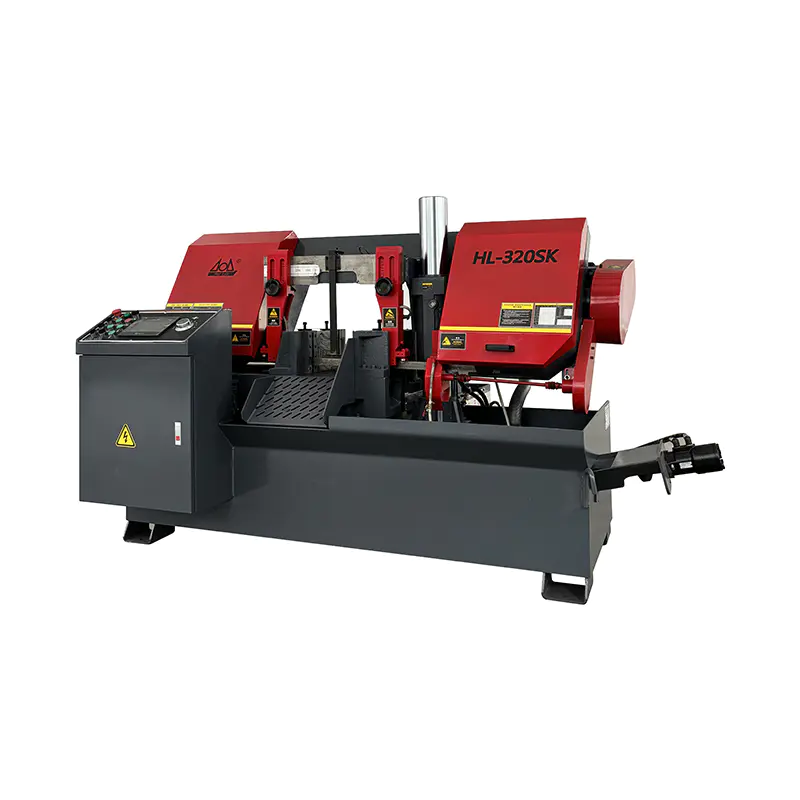
Reducing Cutting Errors Through Programmable Control
Manual measurement and repeated positioning can introduce inconsistencies, especially when processing large batches of metal bars, tubes, or profiles. CNC control allows operators to enter cutting dimensions and production quantities, reducing repeated manual adjustments between workpieces.
For manufacturers producing components with different specifications, programmable settings also simplify changeovers. Operators can retrieve cutting programs for recurring orders, helping maintain consistent dimensions and reduce the risk of measurement errors. The actual accuracy depends on machine rigidity, feeding precision, blade condition, and material characteristics, so these factors should be evaluated together.
Improving Material Utilization During Batch Cutting
Material waste often begins before the cutting process itself. Poor cutting plans, unsuitable stock lengths, and inconsistent positioning can leave unusable remnants or require additional finishing work. A CNC automatic sawing machine can support more organized batch production by combining programmed lengths with controlled feeding.
To improve material utilization, manufacturers should consider:
- Cutting plans: Arrange required lengths to make practical use of each raw material bar.
- Kerf allowance: Include the width of material removed by the saw blade when calculating stock requirements.
- Remnant management: Record usable offcuts for future orders instead of treating every remainder as scrap.
- Feed consistency: Check that the feeding and clamping systems position each workpiece securely before cutting.
These measures help purchasing and production teams manage raw material costs while maintaining reliable output.
Matching Blade Selection to Material Requirements
Even a well-programmed CNC sawing system can produce poor results when the blade does not match the material or cutting conditions. Carbon steel, stainless steel, aluminum, and alloy materials have different cutting characteristics, requiring appropriate blade specifications and operating parameters.
As a manufacturer, we recommend evaluating material hardness, workpiece dimensions, required surface finish, and expected production volume before choosing a blade. Feed rate and cutting speed should follow the machine and blade manufacturer's recommendations. Excessive feed pressure may accelerate tooth wear or cause blade deviation, while unsuitable settings can increase cycle time and affect cut quality.
Maintaining Accuracy Across Repeated Production Runs
Dimensional variation may develop gradually as blades wear, clamping conditions change, or material feeding becomes inconsistent. Regular inspection helps identify these problems before they lead to batches of rejected components.
A practical maintenance routine should include checking blade tension where applicable, inspecting cutting teeth, cleaning chips from clamping and guiding areas, and verifying feed positioning. Operators should also inspect sample cuts after blade changes or significant parameter adjustments. Recording blade usage and recurring cutting defects makes it easier for maintenance teams to identify patterns and schedule servicing appropriately.
Integrating Automation Without Disrupting Workflow
Automation delivers practical value when the sawing machine fits the surrounding production process. Automatic feeding, programmable length control, and unloading arrangements can reduce repetitive handling, particularly in workshops processing standard sections in regular batches.
Before purchasing equipment, buyers should assess stock dimensions, loading space, daily order variation, and the connection between sawing and downstream machining. A highly automated setup may suit stable, high-volume orders, while a more flexible configuration may be appropriate for small batches and frequent product changes. Safety guarding, operator access, and chip removal should also be included in the evaluation.
Evaluating Equipment Beyond the Initial Purchase Price
The purchase price alone does not show the full cost of operating a metal cutting system. Buyers should compare expected blade consumption, maintenance requirements, setup time, energy use, and the cost of rejected parts. Spare parts availability and technical support are also important considerations for facilities operating under demanding delivery schedules.
When comparing CNC sawing machine suppliers, request information about cutting capacity, positioning methods, compatible materials, control functions, and available automation options. Where possible, arrange a cutting test using representative workpieces. Reviewing actual cut quality and operating procedures provides a more useful basis for equipment selection than relying solely on general specifications.
Building a More Reliable Cutting Process
Consistent cutting performance depends on the relationship between machine design, blade selection, operating parameters, and maintenance practices. By addressing these factors together, manufacturers can reduce avoidable errors, improve material utilization, and create a more predictable production workflow. For businesses seeking dependable metal cutting equipment, a properly specified CNC Sawing Machine offers a practical foundation for improving repeatability, controlling operating costs, and supporting future production requirements.


Provide customers with pre-sales professional training, installation, and debugging during sales, solve practical operation problems, and provide long-term technical consultation.
-

+86-0578-3016831
-

+86-0578-3016831
-

-

No. 39, Yahua Road, New District, Huzhen Town, Jinyun County
Copyright © Zhejiang Hongyun Sawing Machine Co., Ltd.

Metal Band Sawing Machine Manufacturer