

 English
 中文简体
中文简体 русский
Horizontal Rotating Angle Metal Band Saw Machine Trends in Automation and Control Systems
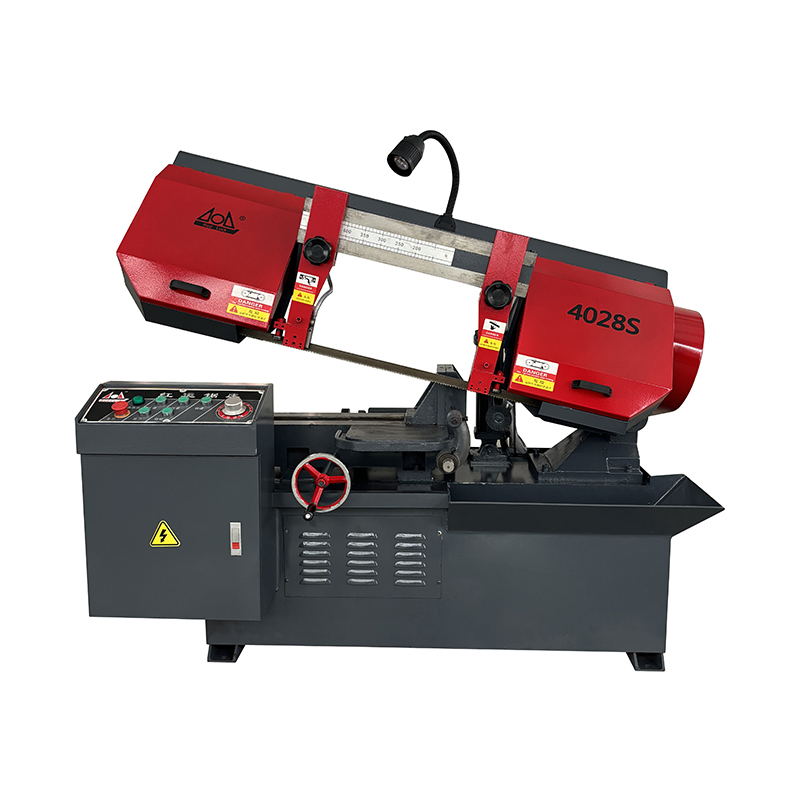
The Horizontal Rotating Angle Metal Band Saw Machine has become an important topic in discussions about automation within metal fabrication environments. As production demands evolve, workshops are increasingly interested in equipment that supports consistent operation while reducing unnecessary manual intervention. Automation and control systems now play a central role in how this type of machine is evaluated and applied in daily manufacturing processes.
The Growing Demand for Automated Cutting Processes
Metal fabrication workshops are under continuous pressure to improve workflow stability and production efficiency. Manual cutting methods often rely heavily on operator experience, which can introduce variation over time. Automation addresses this challenge by allowing machines to follow predefined cutting procedures with greater consistency.
Automated cutting processes also help workshops manage increasingly complex order requirements. As angled cutting becomes more common, machines that can repeat cutting actions with limited manual adjustment offer practical advantages. Automation supports predictable performance, which is valued in both custom fabrication and repetitive production environments.
Evolution of Control System Design
Control systems for band saw machines have developed toward clearer and more intuitive operation. Modern interfaces are designed to help operators understand machine status, cutting progress, and parameter settings at a glance. This clarity supports better communication between the operator and the machine.
Through centralized control, operators can manage multiple aspects of the cutting process from a single interface. Cutting movement, feed behavior, and rotation positioning can be adjusted in a coordinated manner. This integration reduces the need for frequent manual changes and supports smoother transitions between different cutting tasks.
User Interaction and Operational Simplicity
Ease of use has become a key consideration in control system design. Operators often work under time constraints, so systems that present information clearly help reduce setup time. Logical menu structures and straightforward controls allow users to focus on production rather than troubleshooting.
Simplified interaction also supports training efficiency. New operators can become familiar with machine operation more quickly when control systems are intuitive. This reduces reliance on highly specialized personnel and supports workforce flexibility within workshops.
Automated Functions Supporting Daily Efficiency
Automation in horizontal rotating angle band saw machines includes several functions designed to support daily production. Automatic material clamping ensures that each workpiece is secured consistently before cutting begins. This consistency reduces variation caused by manual handling.
Controlled cutting cycles guide the machine through each step of the operation. By following a structured sequence, the machine maintains stable cutting conditions and helps protect the blade from irregular stress. These cycles also reduce the likelihood of operator error during repetitive tasks.
Angle positioning assistance further enhances operational efficiency. When the rotation process is supported by the control system, operators spend less time aligning the machine manually. This is especially valuable when angled cuts are required frequently within a production schedule.
Impact on Production Consistency
Consistency is a major benefit of automated control systems. When cutting parameters are set and managed through a control interface, the machine applies them in the same way for each cycle. This repeatability supports uniform output and reduces the need for corrective actions.
Consistent cutting behavior also helps workshops plan production more effectively. When output quality remains stable, downstream processes such as welding or assembly can proceed with fewer adjustments. This coordination supports a smoother overall workflow.
Considerations When Adopting Automated Systems
While automation offers many benefits, users often evaluate how well a control system fits their existing production environment. Reliability, clarity of operation, and long-term usability are common concerns. Automation should enhance daily tasks rather than complicate them.
Maintenance and system accessibility are also important. Control systems designed with clear diagnostics and accessible components help users maintain stable operation over time. These considerations influence purchasing decisions as much as cutting performance.
Automation and control systems continue to influence the development and application of horizontal rotating angle band saw machines. By supporting consistent operation, simplifying user interaction, and improving workflow coordination, automated systems address practical needs in modern metal fabrication. Understanding these trends helps users select equipment that aligns with long-term production goals and evolving operational demands.


Provide customers with pre-sales professional training, installation, and debugging during sales, solve practical operation problems, and provide long-term technical consultation.
-

+86-0578-3016831
-

+86-0578-3016831
-

-

No. 39, Yahua Road, New District, Huzhen Town, Jinyun County
Copyright © Zhejiang Hongyun Sawing Machine Co., Ltd.

Metal Band Sawing Machine Manufacturer