

 English
 中文简体
中文简体 русский
Horizontal Rotating Angle Metal Band Saw Machine Applications Across Metal Fabrication Industries
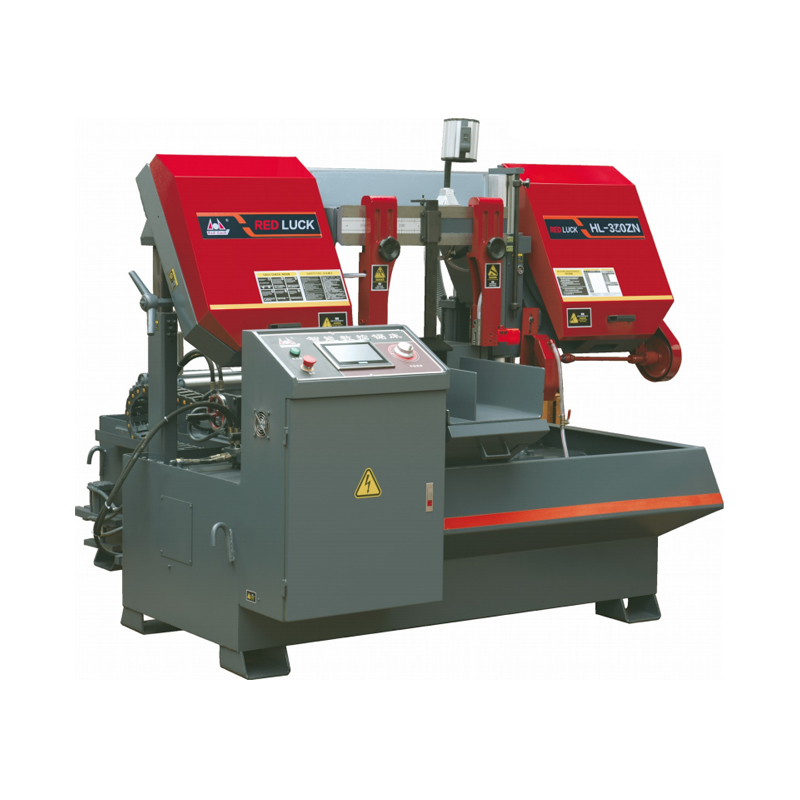
The Horizontal Rotating Angle Metal Band Saw Machine is widely used across metal fabrication industries due to its ability to perform angled cuts with stable and controlled operation. As fabrication requirements become more diverse, this type of machine continues to support a broad range of applications, from workshop-level processing to larger industrial projects.
Role of Angled Cutting in Metal Fabrication
Angled cutting is a common requirement in metal fabrication. Components often need to be cut at specific angles to ensure proper fit during assembly. A horizontal rotating angle band saw machine allows these cuts to be made efficiently without repositioning the material excessively.
This capability supports a smoother production flow. By adjusting the cutting angle through machine rotation, operators can complete tasks with fewer interruptions and maintain consistent cutting conditions.
Processing Common Metal Forms
Fabrication workshops process various material forms, including pipes, tubes, profiles, and solid sections. Horizontal rotating angle band saw machines accommodate these materials through flexible clamping and stable cutting motion.
Consistent support during cutting helps maintain surface quality and dimensional accuracy. This reliability reduces the need for secondary processing and supports efficient material usage.
Applications in Fabrication Workshops
Workshops often handle a mix of custom and repeat orders. Machines that support quick angle adjustments help workshops respond to changing requirements without extensive setup time. This flexibility is particularly valuable in environments where project specifications vary frequently.
Reliable cutting performance also supports quality control. When cuts are consistent, downstream processes such as welding or assembly proceed more smoothly, reducing rework and material waste.
Contribution to Structural Fabrication
Structural fabrication relies on accurate angled cuts for proper alignment during construction. Horizontal rotating angle band saw machines support this requirement by delivering stable cutting behavior across multiple components.
Consistency in angled cuts helps ensure that parts fit together as intended. This consistency supports assembly efficiency and contributes to overall project quality.
Use in Industrial Manufacturing Processes
In industrial manufacturing, band saw machines are often used to prepare materials for further processing. Clean and consistent cuts support subsequent operations, including machining and assembly.
The ability to perform angled cuts expands the range of components that can be prepared using a single machine. This versatility supports streamlined production planning and efficient equipment utilization.
Suitability for Different Production Scales
Production environments vary widely in scale and focus. Some facilities prioritize flexibility for small batches, while others emphasize steady output. Horizontal rotating angle band saw machines adapt to both scenarios through stable cutting performance and flexible setup options.
This adaptability supports long-term equipment value, as the same machine can meet changing production needs over time.
Workflow Integration and Operational Efficiency
Effective workflow integration is essential in modern fabrication environments. Machines that support angled cutting without frequent manual handling help streamline operations. Reduced repositioning improves safety and supports consistent output.
Operators can focus on monitoring cutting quality rather than managing constant adjustments. This shift supports smoother daily operations and better use of available resources.
Across metal fabrication industries, horizontal rotating angle band saw machines provide practical solutions for angled cutting requirements. Their versatility, stability, and adaptability support applications ranging from workshop fabrication to industrial production. Understanding these application scenarios helps users recognize how this equipment contributes to efficient and reliable metal processing workflows.


Provide customers with pre-sales professional training, installation, and debugging during sales, solve practical operation problems, and provide long-term technical consultation.
-

+86-0578-3016831
-

+86-0578-3016831
-

-

No. 39, Yahua Road, New District, Huzhen Town, Jinyun County
Copyright © Zhejiang Hongyun Sawing Machine Co., Ltd.

Metal Band Sawing Machine Manufacturer