

 English
 中文简体
中文简体 русский
Double Column Horizontal Metal Band Saw Comparison with Scissor Type Saw Machines
Metal cutting is an essential stage in many manufacturing processes. Workshops that process steel bars, pipes, and structural components rely on band saw machines to prepare materials before machining or fabrication. Among the commonly used machines are the Double Column Horizontal Metal Band Saw and the Scissor Saw Machine. Each machine type has its own structural characteristics and application environment, which influence its performance during cutting operations.
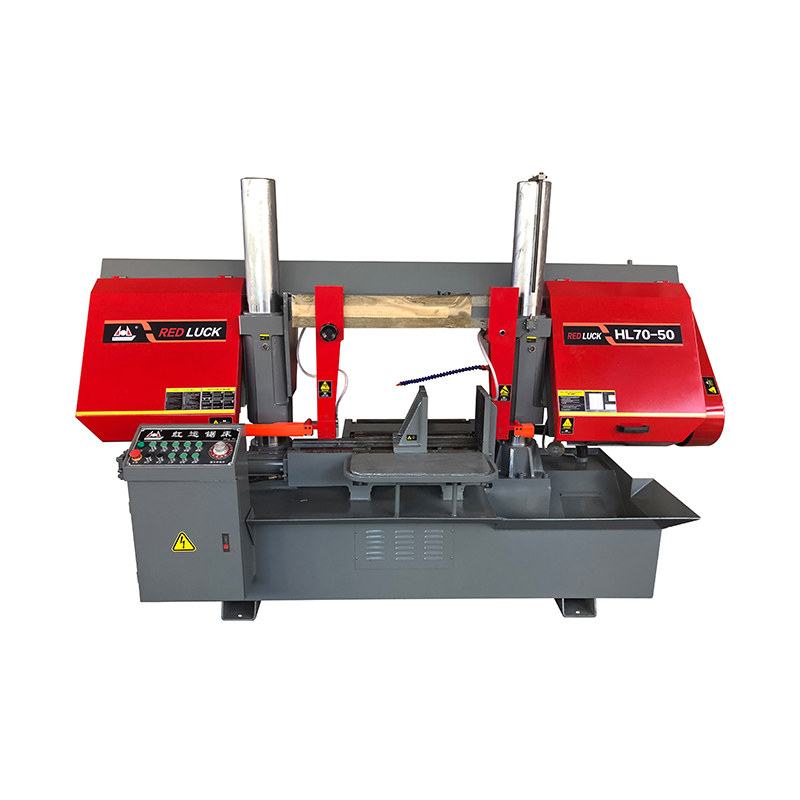
Structure of Double Column Band Saw Machines
The Double Column Horizontal Metal Band Saw uses two vertical columns to guide the saw frame during cutting. These columns support the frame's movement and help maintain stable alignment as the blade cuts through the material.
The band saw blade runs in a continuous loop and is guided by blade guides located near the cutting area. These guides help keep the blade in position during cutting. A clamping system secures the material to the machine base, keeping the workpiece stable as the blade moves through it.
Because the saw frame is supported on both sides, the machine maintains balanced movement throughout the cutting process. This structure is often used in workshops that process larger metal materials or require steady operation during repeated cutting tasks.
Structure of Scissor-Type Band Saw Machines
A Scissor Saw Machine uses a different structural concept. Instead of a dual-column support system, the machine has a pivoting arm that moves downward in an arc during cutting. The band saw blade is mounted on this arm and gradually feeds into the material.
The pivoting structure results in a cutting motion that differs from the guided vertical motion of the double-column machine. The overall machine structure is generally simpler and can require less installation space.
Because of this design, scissor-type machines are often used in workshops where smaller materials are processed or where cutting tasks are less frequent.
Comparison of Application Scenarios
The application range of these machines depends on the material size and production requirements. A Double Column Horizontal Metal Band Saw is commonly used when workshops process thicker metal bars, pipes, or structural components. Its guided structure supports steady blade movement when handling heavier materials.
In comparison, a Scissor Saw Machine is more commonly used for smaller workpieces such as metal bars or tubes that require occasional cutting. The machine’s pivoting arm structure can handle moderate cutting tasks without requiring a larger machine frame.
In workshops that process materials of various sizes, both machines may operate in different cutting areas. This arrangement allows operators to select the appropriate equipment based on the workpiece.
Operational Considerations in Workshops
When choosing cutting equipment, manufacturers often consider several factors, including the size of the materials, the frequency of cutting operations, and available workspace. Larger machines may require more floor space but provide greater stability when processing heavier materials.
Both machines rely on band saw blades that require proper maintenance. Cooling systems, blade guides, and chip removal components help maintain stable machine operation. Operators also need to ensure that materials are clamped securely before cutting begins.
Band saw machines play an important role in preparing metal materials for manufacturing processes. The Double Column Horizontal Metal Band Saw uses a guided dual-column structure that supports a stable cutting motion when processing larger materials.
The Scissor Saw Machine features a simpler pivoting-arm design suitable for lighter cutting tasks. By understanding the structural differences and application environments of these machines, workshops can organize their cutting equipment to support efficient production.


Provide customers with pre-sales professional training, installation, and debugging during sales, solve practical operation problems, and provide long-term technical consultation.
-

+86-0578-3016831
-

+86-0578-3016831
-

-

No. 39, Yahua Road, New District, Huzhen Town, Jinyun County
Copyright © Zhejiang Hongyun Sawing Machine Co., Ltd.

Metal Band Sawing Machine Manufacturer