

 English
 中文简体
中文简体 русский
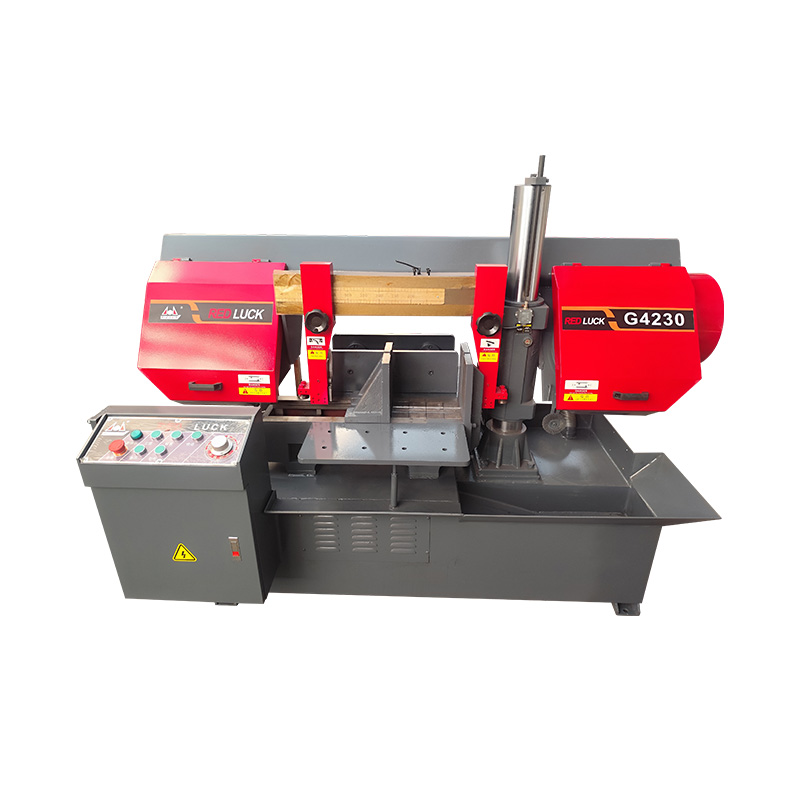
Double Column Horizontal Metal Band Saw Improves Cutting Stability
Cutting stability has become an important factor in modern metal processing industries. Workshops that process steel bars, pipes, alloy materials, and structural components often require cutting equipment capable of maintaining smooth operation during continuous production. The Double Column Horizontal Metal Band Saw is widely used in these environments because its structural design helps support stable blade movement and consistent cutting performance.
In metal cutting operations, unstable movement can affect surface quality, blade wear, and material accuracy. Many factories are now paying greater attention to equipment stability in order to improve production efficiency and reduce interruptions during daily processing tasks.
Importance of Stable Cutting in Metal Processing
During metal cutting operations, vibration and uneven feeding pressure may influence the overall cutting result. When processing large or dense materials, unstable machine movement can lead to blade deviation, rough cutting surfaces, and inconsistent dimensions.
For industrial manufacturers, cutting quality affects many later production stages, including welding, machining, drilling, and assembly. Stable cutting performance helps workshops maintain smoother workflow organization and reduce unnecessary material adjustments.
In batch production environments, consistent cutting conditions are especially important because large quantities of materials are processed repeatedly throughout the day. Equipment capable of maintaining steady operation can support more reliable production schedules.
Advantages of the Double Column Structure
One of the key features of a double-column horizontal metal band saw is its dual-column guidance system. The saw frame moves along guide columns positioned on both sides of the machine, helping maintain balanced movement during operation.
Compared with simpler machine structures, the double column arrangement helps reduce unwanted movement when cutting heavy materials. The saw blade travels more smoothly, supporting stable blade positioning throughout the cutting process.
This structure also helps distribute cutting pressure more evenly across the machine. Balanced force distribution can support smoother cutting performance when handling thick steel bars, stainless steel materials, and alloy components.
The rigid machine frame is designed to support continuous industrial use. Stable structural support becomes especially important when workshops process large workpieces or perform repeated cutting tasks over long operating hours.
Improving Cutting Accuracy and Surface Quality
Stable blade movement plays an important role in maintaining cutting accuracy. During operation, excessive vibration may affect cutting straightness and create uneven surfaces on processed materials.
The double column design helps support smoother feeding movement, allowing the blade to maintain more consistent contact with the workpiece. This can contribute to cleaner cutting surfaces and improved dimensional consistency.
For manufacturers processing precision metal components, stable cutting conditions are important because inaccurate material sizing may increase later machining adjustments. Consistent cutting quality can help improve production coordination across different manufacturing stages.
Controlled feeding systems are also commonly used in double-column band saw machines. Hydraulic feeding functions help regulate cutting pressure during operation, supporting smoother blade travel under different material conditions.
Supporting Longer Blade Service Life
Blade wear is an important concern in industrial cutting applications. Unstable operation and excessive vibration may increase stress on the blade, leading to faster wear during continuous production.
A stable machine structure can help reduce unnecessary blade movement during cutting. Proper blade tension combined with balanced saw frame travel supports smoother operation and may help reduce irregular blade wear.
Cooling systems also contribute to blade performance. During metal cutting, heat is generated through friction between the blade and workpiece. Coolant circulation systems help manage cutting temperatures and support cleaner cutting conditions.
Chip removal systems are another useful feature in industrial workshops. Accumulated metal chips may affect blade movement if not removed efficiently. Cleaner cutting areas help maintain smoother operation during long production cycles.
Applications in Industrial Manufacturing
Double column horizontal metal band saws are widely used in industries that require stable and repetitive metal cutting operations. Common applications include:
- Steel fabrication workshops
- Machinery manufacturing plants
- Automotive parts processing
- Metal service centers
- Construction equipment production
These industries often process large metal materials that require reliable cutting equipment for daily production tasks.
As industrial manufacturing continues to develop, many workshops are focusing more on cutting consistency, operational stability, and maintenance efficiency. Double-column horizontal metal band saws continue to support these production needs by providing stable cutting performance across different metal processing applications.


Provide customers with pre-sales professional training, installation, and debugging during sales, solve practical operation problems, and provide long-term technical consultation.
-

+86-0578-3016831
-

+86-0578-3016831
-

-

No. 39, Yahua Road, New District, Huzhen Town, Jinyun County
Copyright © Zhejiang Hongyun Sawing Machine Co., Ltd.

Metal Band Sawing Machine Manufacturer